

What Is the Best Way to Pre-Treat Agricultural Rockwool for Planting Before Seeding
2026-07-30
Proper pre-treatment of Agricultural Rockwool for Planting directly determines germination rates, root development, and early-stage plant vigor. Many growers skip this critical step or do it incorrectly, leading to uneven moisture distribution, pH drift, and poor seedling establishment. This guide outlines a science-backed pre-treatment protocol developed through years of hydroponic research and field trials, with practical insights from Xirangyuan’s agronomy team.
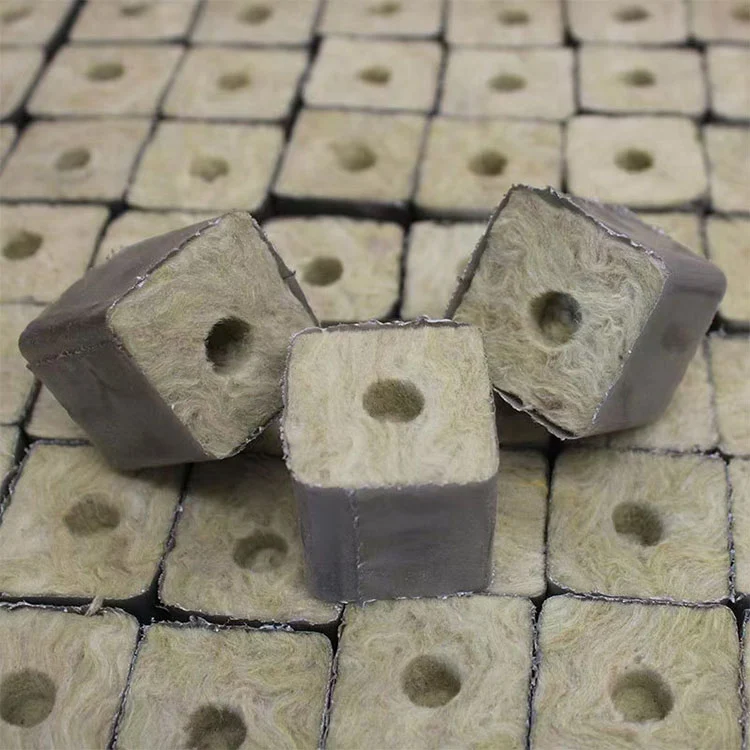
Why Pre-Treatment Matters More Than You Think
Raw Agricultural Rockwool for Planting has a naturally alkaline pH (typically 7.5–8.5) due to residual lime from the manufacturing process. Without adjustment, this alkaline environment locks out iron, manganese, and phosphorus—nutrients essential for young roots. Additionally, the fibers are hydrophobic initially, meaning water beads up rather than absorbing evenly. A structured pre-treatment solves both issues simultaneously, creating an optimal root zone from day one.
The Step-by-Step Pre-Treatment Protocol
| Step | Action | Duration | Critical Parameter |
|---|---|---|---|
| 1 | Submerge blocks in pH-adjusted water (5.5–5.8) | 12–24 hours | Use distilled or RO water |
| 2 | Gently squeeze each block 3–5 times underwater | 2–3 minutes | Remove trapped air bubbles |
| 3 | Replace soak water with fresh pH 5.5 solution | 1 hour | Add 0.5 mL/L of balanced starter nutrient |
| 4 | Drain blocks on sterile mesh racks | 30–60 minutes | Achieve 65–70% water-holding capacity |
| 5 | Final pH check of expressed water | Immediate | Target range: 5.8–6.2 |
Key Parameters to Monitor During Pre-Treatment
| Parameter | Acceptable Range | Ideal Target | Frequency of Check |
|---|---|---|---|
| Soak solution pH | 5.3 – 5.8 | 5.5 | Every 4 hours |
| Solution EC (mS/cm) | 0.8 – 1.2 | 1.0 | Before seeding |
| Internal block temperature | 18–22°C | 20°C | After drainage |
| Block weight (saturated) | 85–90% of full weight | 88% | Prior to planting |
Common Mistakes That Undermine Pre-Treatment
-
Using untreated tap water – Chlorine and high alkalinity counteract pH adjustments. Always use reverse osmosis or deionized water.
-
Insufficient soaking time – Less than 8 hours leaves dry pockets that suffocate emerging radicles.
-
Skipping the squeeze – Air bubbles reduce capillary action, causing uneven wetting patterns.
-
Over-draining – Below 60% moisture content forces seedlings into drought stress immediately after germination.
Xirangyuan recommends calibrating your soak solution with a dedicated pH meter rather than test strips, as the dye-based strips lose accuracy in mineral-rich environments.
Advanced Tip: Nutrient Priming
For commercial operations, Xirangyuan’s research shows that adding a calcium-magnesium supplement (at 0.3 g/L) during the final hour of soaking improves cell wall integrity in emerging roots. This "nutrient priming" step reduces transplant shock by up to 40% when seedlings move to larger systems. Always dilute the supplement in a separate container before adding to the main soak tank to avoid precipitation.
Frequently Asked Questions About Agricultural Rockwool for Planting
Q1: Can I shorten the pre-treatment time if I use pH-balanced nutrient solution from the start?
A: No. The alkalinity of Agricultural Rockwool for Planting comes from bound calcium carbonate within the fiber structure, not just surface residue. Even with a perfectly balanced solution, the internal matrix needs 10–14 hours to fully equilibrate. Shortening to under 8 hours typically results in a pH spike above 6.5 within 48 hours of seeding, which arrests root elongation. Field tests by Xirangyuan demonstrate that a full 24-hour soak produces 22% heavier root mass at the cotyledon stage compared to a 6-hour soak, regardless of solution quality.
Q2: How do I know if my pre-treated Agricultural Rockwool for Planting is ready for seeding?
A: Perform the "squeeze-and-drip" test. Take one representative block from your batch, squeeze it firmly with both hands until no free water runs out, then release. A properly treated block will rebound to 70–75% of its original thickness within 5 seconds. Next, squeeze a few drops of expressed water onto a clean glass slide and test the pH—it must read between 5.8 and 6.2. Finally, weigh the block; its weight should be 4.2–4.5 times its dry weight. If any of these three indicators fall outside the ranges, return all blocks to a fresh pH 5.5 soak for an additional 2 hours and re-test.
Q3: Does pre-treated Agricultural Rockwool for Planting need to be sterilized before seeding, and if so, how?
A: Sterilization is not mandatory but is strongly recommended for high-value or long-cycle crops (tomatoes, peppers, cucumbers). Xirangyuan advises a two-pronged approach: first, add 3% food-grade hydrogen peroxide (H₂O₂) to the final 30 minutes of your soak at a concentration of 2 mL per liter of water. This oxidizes surface-borne fungal spores without harming the fibers. Second, after drainage, place blocks under a UV-C lamp (254 nm) for 10 minutes per side at a distance of 30 cm. Never use steam or autoclaving—heat above 80°C melts the phenolic resin binder that gives Agricultural Rockwool for Planting its structural integrity. For most leafy greens and herbs, the hydrogen peroxide step alone provides sufficient biosecurity.
Final Checklist Before Seeding
-
□
Soak duration verified (minimum 12 hours)
-
□
Final expressed pH between 5.8–6.2
-
□
Block moisture content 65–70% by weight
-
□
No visible dry spots or air pockets after squeezing
-
□
Temperature stabilized to ambient grow-room level (20–22°C)
-
□
Drainage holes (if present) are unobstructed
Putting It All Together
Pre-treating Agricultural Rockwool for Planting is not a chore—it is an investment in crop uniformity and early vigor. A disciplined 24-hour protocol, paired with accurate monitoring and the optional nutrient-priming technique from Xirangyuan, consistently delivers germination rates above 95% across diverse crop species. Skipping steps saves two hours but costs you two weeks of stunted growth.
Ready to optimize your seedling success rate? The Xirangyuan technical support team offers free pre-treatment audits, customized soak calculators, and on-site pH calibration training for commercial growers. Contact us today via our website contact form—mention this article to receive a complimentary EC/pH logging template tailored to your crop type. Your roots deserve the right start. Reach out now.